Budapest Financial Summit
nyomtatás
16-17 September 2026

Welcoming Remarks by Governor Mihály Varga
We are living in a period defined by profound structural transformation. As global economic and political structures evolve amid heightened uncertainty and fragmentation, central banking is undergoing transformation as well. In a rapidly transforming global landscape, central banks must navigate an era shaped not only by monetary policy and financial challenges, but also by deep structural shifts. This dynamic environment challenges monetary authorities to maintain price and financial stability while adapting themselves to broader structural changes such as rapid technological advancements, sustainability imperatives, and intensifying geopolitical and digital vulnerabilities that influence both economic growth and resilience.
Grappling with these complex forces cannot simply be reduced to incremental adjustments. It requires openness to innovative approaches and sustained cross-border dialogue. This conviction has led the Magyar Nemzeti Bank, the central bank of Hungary to launch the Budapest Financial Summit – a new international conference series created to bring together leading financial, economic, and policy stakeholders from diverse institutional and regional backgrounds for in-depth exchange of perspectives, experiences, and best practices on the challenges and opportunities defining the global financial landscape.
At a time when decoupling tendencies increase in the global economy, the Budapest Financial Summit is anchored in promoting the value of cooperation. Convened in Budapest, a capital in the centre of Europe, the Summit aims to serve as a bridge for structured exchange between Western and Eastern economic and financial perspectives.
I sincerely hope that this new conference series will foster substantive dialogue, generate new insights, and encourage enduring professional partnerships. The Magyar Nemzeti Bank remains firmly committed to constructive international engagement, and I am certain that the Budapest Financial Summit will become a valuable contribution to this shared endeavour.
PROGRAMME
Central Banking in a Fragmented World
Conference Venue: Magyar Nemzeti Bank (MNB) Buda HQ, 1013 Budapest, I. district, Krisztina körút 55. (Hungary)
Wednesday, 16 September 2026
08:00-09:00
Registration
09:00–09:40
High-level opening Ceremony
- Mihály Varga, Governor, Magyar Nemzeti Bank
- Fatih Karahan, Governor, Central Bank of the Republic of Türkiye
09:40–10:20
Networking Coffee Break
PANEL 1. FINANCE: The Potential and the Limitations of Alternative Reserve Assets in the International Monetary System
DescriptionThe international monetary system has entered a period of gradual but tangible change. While the US dollar remains the dominant reserve and settlement currency, geopolitical conflicts, sanctions and the growing debate on de-dollarisation have intensified discussions about the composition of foreign exchange reserves. This panel will focus on how central banks may adapt their reserve portfolios if the global role of the dollar changes. The discussion will examine the potential and the limitations of alternative reserve assets – including gold, other precious metals and digital assets – and assess why most central banks continue to rely primarily on traditional reserve currencies and highly liquid government securities.
10:20–11:20
Panel discussion
- Arnab Das, Co-Founder, GeoLogica Strategies
- Prof. Barry Eichengreen, George C. Pardee & Helen N. Pardee Chair, Distinguished Professor of Economics and Political Science, University of California (Berkeley)
- Hee Sup Jung, Director General of Reserve Management Group, Bank of Korea
Moderator:
- Zoltán Kurali, Deputy Governor, Magyar Nemzeti Bank
11:20–11:40
Coffee Break
PANEL 2. ECONOMY: Fragmentation in Global Capital Flows: Implications for Financial Stability
DescriptionThis panel examines the fragmentation of global capital flows and how it is changing the financing conditions across countries. The discussion will focus on whether capital is becoming more regionally concentrated and more sensitive to geopolitical alignment, and how this affects cross-border investment in practice. Panelists will address the broader implications for exchange rates, funding costs, and the stability of capital flows, particularly during periods of market stress. A central question is whether fragmentation is making external financing less predictable and more uneven across countries. The panel will evaluate the adequacy of current monetary and macroprudential frameworks in managing increasingly volatile, less diversified capital flows, and consider whether new policy tools are needed.
11:40–12:40
Panel discussion
- Andreas Billmeier, Visiting Fellow, Bruegel
- Radovan Jelasity, Chairman and CEO, Erste Bank; President, Hungarian Banking Association
- Dr. Gertrude Tumpel-Gugerell, Member of the Supervisory Board, Vienna Insurance Group; Former Member of the Executive Board, European Central Bank (ECB)
Moderator
- Dániel Palotai, Deputy Governor, Magyar Nemzeti Bank
12:40–14:00
Luncheon
Thursday, 17 September 2026
08:30–09:00
Registration
09:00–09:15
MNB International Green Finance Lifetime Achievement Scientific Award Ceremony
Awardee:
- Prof. Patrick Bolton, Professor of Finance and Economics, Imperial Business School, Imperial College London
Presented by:
- Dr. Levente Sipos-Tompa, Deputy Governor, Magyar Nemzeti Bank
09:15–10:15
Opening Lecture
From Sandbox to Scale: Singapore’s Playbook for Responsible Financial Innovation
DescriptionFinancial innovation succeeds when an ecosystem can move beyond isolated pilots and convert experimentation into trusted, widely adopted infrastructure. Singapore’s experience offers lessons about the institutions, incentives and collaboration required to make that transition.
- Holly Fang, President, Singapore FinTech Association
Moderator
- Géza Sebestyén, Associate Professor, Corvinus University of Budapest
10:15–10:40
Coffee Break
10:40-13:00
SIMULTANEOUS WORKSHOPS
10:40-11:40
WORKSHOP I.
Session 1: AI-Powered Central Banking: Innovation and Efficiency
DescriptionArtificial intelligence is rapidly transforming the way central banks operate, offering new tools for big data-driven monetary policy analysis, more accurate forecasting, supporting decision-making, and the real-time monitoring of financial markets and institutions. It is also playing an increasing role in the early identification of systemic risks, in supporting supervisory functions, and in the automation of administrative and routine tasks. The panel will explore to what extent, and under what conditions, these capabilities can be effectively integrated into central banking practice, where AI can deliver genuine added value, and where caution is warranted in its application. Alongside the opportunities offered by AI, participants will also discuss its limitations and risks, with particular attention to decision-making biases, the handling of sensitive data, the protection of data assets, and the risks arising from model use and technological infrastructure.
- Chang Kee Lee, Head of Digital Strategy Team, Bank of Korea
- Pedro Quinaz, Deputy Director of Prudential Banking Supervision, Banco de Portugal
Moderator
- Balázs Greinstetter, Director of Digitalisation Directorate, Magyar Nemzeti Bank
Session 1: Smarter Systems, Safer Finance: Supervisory Technologies Against Cybercrime and Fraud
DescriptionAs cyber threats grow more complex, regulators are increasingly turning to cutting-edge technologies to protect the integrity of payment systems and strengthen consumer trust. This workshop will explore how SupTech solutions are transforming the fight against financial cybercrime. Regulators and experts will share best practices, innovative supervisory tools, and lessons learned from implementing advanced fraud prevention systems. How can technology enhance the efficiency and responsiveness of supervision? What innovations are shaping the future of secure and transparent digital finance? The workshop will offer a forward-looking platform to showcase practical solutions and foster global cooperation in the era of technology-driven supervision.
- Assel Marchenko, Deputy Chair of the Management Board, National Payment Corporation Kazakhstan
- Philip Middleton, Deputy Chairman, Official Monetary and Financial Institutions Forum (OMFIF)
Moderator
- Miklós Luspay, Director of Financial Infrastructures and Payments Directorate, Magyar Nemzeti Bank
Session 1: Central Bank Green Finance Initiatives
DescriptionThis session will explore how central banks around the world are integrating sustainability into their monetary and prudential frameworks. Participants will learn about various green finance initiatives that encourage environmentally responsible lending and investment, including examples from both advanced and emerging economies. The discussion will focus on how capital requirements, financial supervision, and regulatory incentives can be aligned with climate and sustainability goals. International best practices and pilot programmes will be reviewed to assess their effectiveness and scalability. The Hungarian experience with the Green Preferential Capital Requirement (GPCR) programme will be presented as a case study illustrating how such initiatives can support green investment while maintaining financial stability. The track will also touch upon recent developments in central banking that question the inclusion of explicit green objectives within central bank mandates.
- Norbert Holczinger, Head of Sustainable Finance Department, Magyar Nemzeti Bank
- Shahin Mahmudzade, Executive Director, Central Bank of Azerbaijan
- Shasha Kartini Ridzam, Director of Sustainability, Bank Negara Malaysia
Moderator:
- Gábor Gyura, Founder & Director, Hungarian Sustainable Investment and Finance Association (HuSif)
11:40-12:00
Coffee break
12:00-13:00
WORKSHOP II.
Session 2: AI Strategies and the Financial Sector: Balancing Innovation, Regulation and Stability
DescriptionAn increasing number of countries are developing comprehensive national AI strategies, in which the financial sector and the FinTech ecosystem appear with varying levels of emphasis. While finance has traditionally been a highly regulated domain, artificial intelligence has become a key driver of innovation and economic growth. As a result, the responsible and effective adoption of AI is essential to maintaining competitiveness. However, the critical question is how policymakers and financial institutions can keep pace with these developments. The safe deployment of AI-based systems has the potential to significantly enhance efficiency and oversight. At the same time, from both national security and financial stability perspectives, it is crucial to address the risks associated with AI and to explore mechanisms for safely and gradually adapting regulatory frameworks. Another important dimension is how governments collaborate with independent financial regulators and central banks. Is the active involvement of financial authorities necessary in government-led innovation environments such as regulatory sandboxes and testbeds? If so, in what form and to what extent should this involvement take place?
- Prof. Dr. Hoda Alkhzaimi, National Expert on Advanced Sciences Research and Future Economy, The UAE National Expert Program
- Kwanho Shin, Chair, Korea Money and Finance Association Fund, Professor of Economics, Korea University
Moderator:
- Sholthana Begum, Senior Director of Technology and Digital, Competition and Markets Authority (CMA)
Session 2: Smart Minds, Safe Systems: Educating for Financial Literacy and Fraud Prevention
DescriptionThis workshop will bring together regulators, educators, and experts to explore how financial education can strengthen resilience against fraud and enhance the stability of the financial system. How can knowledge become the first line of defense against emerging financial risks? What role does education play in building a secure and trustworthy financial ecosystem? Participants will share best practices, innovative strategies, and policy insights to advance financial awareness and digital safety in an increasingly complex financial landscape.
- Magda Bianco, Head of Consumer Protection and Financial Education Department, Banca d’Italia
- Patrick Casey, Head of Cross-Sectoral Policy Division, Central Bank of Ireland
Moderator:
- Dr. Mariya Pionka, Associate Professor, Research and Graduate Program Coordinator, Excelsia University College
Session 2: Quantified Goals of Climate Finance
DescriptionIn this session, the awardee of the MNB International Green Finance Lifetime Achievement Scientific Award 2026, Patrick Bolton (Professor of Finance and Economics of the Imperial College London) will present insights from his research across contract theory, corporate finance, and sustainable finance, with a particular focus on climate finance and global decarbonisation. The session will examine how financial markets price climate-related risks and how public policy shapes corporate and investor behaviour. A central theme will be the economic rationale for large-scale climate finance coalitions, in which advanced economies provide financial support to emerging and developing countries in return for commitments to decarbonise their power sectors. The discussion will also address why global mitigation efforts depend critically on such arrangements, the limitations of current grant-based mechanisms, and how coordinated climate finance can accelerate the transition away from fossil fuel-based electricity generation while reducing global systemic climate risk.
- Prof. Patrick Bolton, Professor of Finance and Economics, Imperial Business School, Imperial College London
Moderator:
- Szilvia Gólya, Head, Green Competence Center, OTP Bank
13:00-14:30
Luncheon
SPEAKERS

Mihály Varga
Governor
Magyar Nemzeti Bank
Mihály Varga
Magyar Nemzeti Bank
Governor
Born in Karcag in 1965, he earned his secondary school diploma in Áron Gábor Secondary School in 1983, and he went on to graduate from the Budapest University of Economic Sciences in 1989.
He worked as an economist at the No. 43 State Construction Corporation in Budapest, and in 1990 at the Eastern-Hungarian Water Management and Planning Enterprise in Szolnok. Between 1995 and 1997, he was a visiting instructor at the Szolnok Economic College, and an honorary college professor.
Between 1998 and 2001, he served as Minister of State for Policy at the Ministry of Finance, and from 2001 to 2002, he held the position of Minister of Finance. Between 2010 and 2012 he was Minister of State, Head of the Prime Minister’s Office, and then he became Minister without Portfolio responsible for the relations with some international financial organisations. From March 2013 to 2018 he was Minister of National Economy. From March 2017 to 2022 he was President of the National Competitiveness Council. Between 2018 and 2024 he served as Minister of Finance. Since 4 March 2025, he has been the Governor of the Magyar Nemzeti Bank.
From 1990 to February, 2025 he was member of Parliament in representation of Fidesz. He was an elected member of Parliament for the 8th constituency of Jász-Nagykun-Szolnok County between 1998 and 2014, then he was the elected member of Parliament in an individual electoral district for the Budapest 4th constituency between 2014 and 2022. Between 1994 and 2003 and from 2005 to 2013, he was one of the vice presidents of Fidesz.
Roles in public life: Since 1997, the vice-president of the Hungarian-Kazakh Friendship. From 2000, member of the Chivalric Order of St John. From 2001 to 2011, presbyter of the Reformed Church congregation in Karcag, and a member of the Rákóczi Association. From 2003 to 2015, Chair of the Nagykun Civil Association. Member of the Hungarian Athletic Club. From 2012 to 2025, co-president of the Joint Venture Association, the Hungarian-Kazakh Intergovernmental Committee for Economic Cooperation and the Hungarian-Korean Joint Economic Committee. From 2013 to 2025, the president of the Board of Trustees of the Annamária Szalay Media Foundation. From 2021 to 2023, the president of the Board of Trustees of the Foundation for Rudolf Kalman University. From 2021 to 2025, the president of the Board of Trustees of the Foundation for Civic Education.
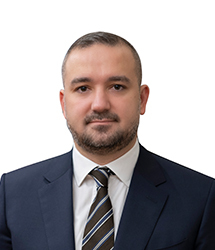
Fatih Karahan, Ph.D.
Governor
Central Bank of the Republic of Türkiye
Fatih Karahan, Ph.D.
Central Bank of the Republic of Türkiye
Governor
Fatih Karahan was born in 1982 in Eskişehir and graduated from Boğaziçi University, Departments of Mathematics and Industrial Engineering in 2006. After earning a master's degree, he completed a Ph.D. in economics at the University of Pennsylvania in 2012.
Mr. Karahan started his career as an economist at the Federal Reserve Bank of New York in 2012 and served as the Team Leader of Labor and Product Market Studies and also a monetary policy advisor at the Bank until 2022.
He also taught as an adjunct professor at Columbia University and New York University. Then, Mr. Karahan became a senior economist at Amazon in 2022 and was appointed principal economist there in November 2022.
Mr. Karahan, who had been acting as Deputy Governor of the Central Bank of the Republic of Türkiye since 28 July 2023, was appointed Governor on 3 February 2024.

Holly Fang
President
Singapore FinTech Association
Holly Fang
Singapore FinTech Association
President
Holly Fang is President of the Singapore FinTech Association (SFA), Singapore’s leading national fintech industry body, where she represents the industry and works closely with regulators, financial institutions, technology companies and founders to advance the development of Singapore’s fintech ecosystem. In this role, she helps shape industry dialogue on innovation, regulation, talent and cross-border collaboration, while strengthening Singapore’s position as a leading global fintech hub.
Holly is also the Chief Business Officer at Finmo, a global Treasury Operating System for businesses, where she oversees strategic partnerships and market expansion. Prior to joining Finmo, Holly held leadership roles at Aspire, a Singapore-based fintech providing all-in-one financial workflow solutions to SMEs, and at Airwallex, the global leader in cross-border payments. Holly began her career at the Singapore Economic Development Board, and brings over a decade of experience leading strategic partnerships across both the public and private sectors.
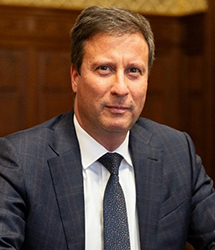
Dániel Palotai
Deputy Governor
Magyar Nemzeti Bank
Dániel Palotai
Magyar Nemzeti Bank
Deputy Governor
As from September 2025, Dániel Palotai is Deputy Governor of the Magyar Nemzeti Bank (MNB), in which capacity he is Member of the Monetary Council and he is also responsible for international relations.
Between 2020 and 2025, he served in Washington DC on the Executive Board of the International Monetary Fund (IMF), representing the Central and Eastern European Constituency as Executive Director, and from November 2024 as Alternate Executive Director. From 2013 to 2020, he was Executive Director and Chief Economist of the MNB. From November 2010, he headed the Macroeconomic Policy Department of the Ministry for National Economy. Between 2007 and 2010 he served at the European Central Bank as an economist responsible for non-euro area EU member states.
In 2015, he was awarded the Sándor Popovics Prize. He is an Honorary Associate Professor at Corvinus University of Budapest. He is Vice President of the Hungarian Economic Association (MKT)

Barry Eichengreen
Distinguished Professor of Economics and Political Science
George C. Pardee & Helen N. Pardee Chair
University of California (Berkeley)
Barry Eichengreen
University of California (Berkeley)
George C. Pardee & Helen N. Pardee Chair
Distinguished Professor of Economics and Political Science
Barry Eichengreen is George C. Pardee and Helen N. Pardee Chair and Distinguished Professor of Economics and Professor of Political Science at the University of California, Berkeley. He is a Research Associate of the National Bureau of Economic Research and Research Fellow of the Centre for Economic Policy Research. In 1997-98 he was Senior Policy Advisor at the International Monetary Fund.
Professor Eichengreen is a fellow of the American Academy of Arts and Sciences (class of 1997). He is a distinguished fellow of the American Economic Association (class of 2022), a corresponding fellow of the British Academy (class of 2022), a corresponding member of the Lisbon Academy of Sciences (class of 2025), and a Life Fellow of the Cliometric Society (class of 2013). He has held Guggenheim and Fulbright Fellowships and been a fellow of the Center for Advanced Study in the Behavioral Sciences (Palo Alto) and the Institute for Advanced Study (Berlin). For 15 years from 2004 he served as convener of the Bellagio Group of academics and officials. He is a regular monthly columnist for Project Syndicate.
Professor Eichengreen has been awarded the Economic History Association's Jonathan R.T. Hughes Prize for Excellence in Teaching and the University of California at Berkeley Social Science Division's Distinguished Teaching Award. He is the recipient of a doctor honoris causa from the American University in Paris, and was the 2010 recipient of the Schumpeter Prize from the International Schumpeter Society and the 2022 recipient of the Nessim Habif Prize for Contributions to Science and Industry. He was named one of Foreign Policy Magazine's 100 Leading Global Thinkers in 2011. He is a past president of the Economic History Association (2010-11).
His most recent book is Money Beyond Borders: Global Currencies from Croesus to Crypto (Princeton University Press, 2026).
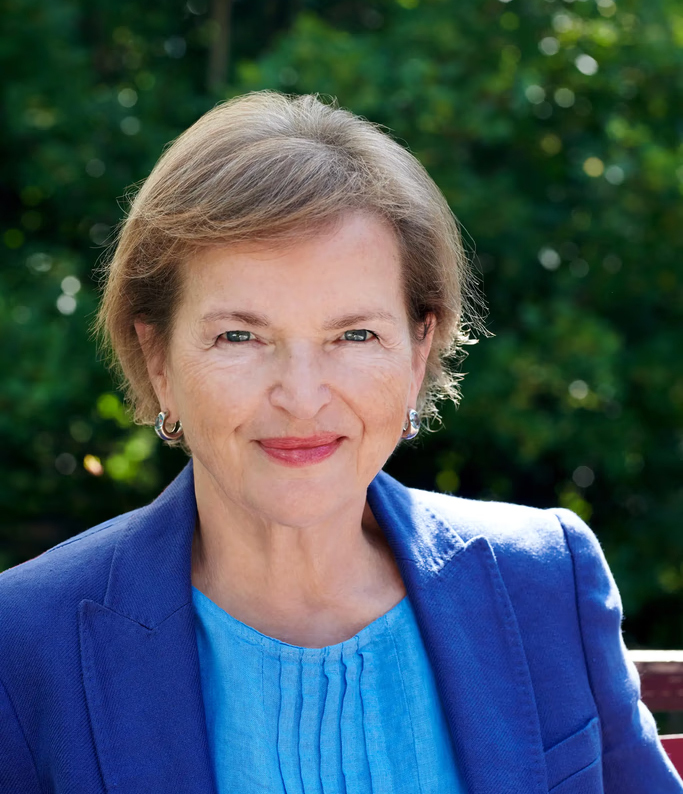
Dr. Gertrude Tumpel-Gugerell
Former Member of the Executive Board
European Central Bank
Dr. Gertrude Tumpel-Gugerell
European Central Bank
Former Member of the Executive Board
Gertrude Tumpel-Gugerell is former Member of the Executive Board of the European Central Bank (ECB) from 2003-2011 and former Vice-Governor of the Austrian Central Bank (1998-2003).
Prior to this, Ms Tumpel-Gugerell held various positions at the Ministry of Finance (Cabinet of the Minister) and at the Austrian Central Bank including Executive Director for Economics and Financial Stability.
She was closely involved in the introduction of the Euro, was member of the European Finance Committee (EFC) from 1998-2003 and chaired the Banking Advisory Committee of the European Commission.
Currently she is Board Member of the Institute for Economic Research (WIFO) and the Institute for International Economic Studies (wiiw) in Vienna and Senior Fellow of SAFE (Frankfurt). Non-Executive Director of listed companies: Commerzbank(2012-2025), VIG (lnsurance Company) ongoing, AT&S (Semiconductor company) ongoing
Zoltán Kurali
Deputy Governor
Magyar Nemzeti Bank
Zoltán Kurali
Magyar Nemzeti Bank
Deputy Governor
From April 22, 2025, he serves as Deputy Governor of the Magyar Nemzeti Bank, responsible for monetary policy, financial stability, and foreign reserve management. Prior to his appointment, he was the CEO of the Government Debt Management Agency (ÁKK Zrt.).
Between 2006 and 2019, he worked at Deutsche Bank, where he held several senior positions, including CEO in Hungary, Head of Capital Markets for the region, Head of Bond Markets, and Head of Corporate Finance. He was involved in numerous strategic debt and equity financing transactions, as well as in foreign exchange, interest rate, commodity, and credit risk management, primarily in Hungary and the Central and Eastern European region.
From 1999 to 2006, he worked at Citibank as Head of Treasury Sales.
He graduated from the Budapest University of Economics in 1998. He began his professional career during his university years as a research analyst at various local brokerage firms and worked on a project basis at ÁKK between 1997 and 1998.

Prof. Dr. Hoda Alkhzaimi
National Expert on Advanced Sciences Research and Future Economy
The UAE National Expert Program
Prof. Dr. Hoda Alkhzaimi
The UAE National Expert Program
National Expert on Advanced Sciences Research and Future Economy
Prof. Dr. Hoda Alkhzaimi is a Strategic Economic and Investment Advisor with over two decades of experience at the intersection of advanced science, industry, research and technology, economic strategy, and international investments. She spent the first 12 years of her career in sovereign wealth funds, developing diversified long-term assets in advanced industries, sciences, and new economic zones.
She currently serves as Associate Vice Provost for Research Translation and Innovation and Assistant Professor of Engineering at New York University Abu Dhabi, where she leads initiatives that transform research into market-driven industries by fostering collaboration between academia, industry, and government. She is also the Founder and Director of EMARATSEC, a center focused on accelerating emerging technologies, advanced research, and market creation, and a Founding Partner of Bluverse Ventures, building global investment vehicles in deep science and competitive industries.
At the international level, Dr. Hoda is an Advisor and Mentor to the UNDP AI Trust and Safety Re-Imagination Programme, an Advisor to Ignyte, Dubai’s first advisory platform for startups and ventures launched under the Dubai Digital Economy Mandate, and a Member of the Academic Advisory Body on Emerging Technologies at the International Telecommunication Union (ITU), convened by the Secretary-General. She also contributes to global policy and strategic foresight as Co-Chair (2024–2025) and Member (2025–2026) of the World Economic Forum’s Global Future Council on Cybersecurity, as well as Director Emeritus of the Centre for Cybersecurity.
In addition to her academic and policy leadership, she serves on the advisory boards and boards of multiple listed companies across critical sectors, including advanced industries, energy, technology, and financial services, where she advises on emerging technologies, market competitiveness, and long-term investment strategies.
Her focus on Sustainable Development Goals-based investments aligns with her expertise as she advises on strategic technology adoption and industry convergence for the BRICS advisory councils, G20 trade dialogues, and leading global companies such as Jaguar Land Rover (UK) and Tata Group (India). Dr. Hoda holds a Ph.D. in Computer Science and Mathematics (Technical University of Denmark), a Master’s in Cryptology, Security, and Information Coding (Université de Grenoble and Université Joseph Fourier, France), a Master’s in Financial and Business Big Data Analytics (ESCP), a Master’s in International Business Law (Paris-Sorbonne University), an Executive MBA in Investments and Finance (London Business School), and a B.Sc. in Computer Engineering (United Arab Emirates University).
As an advocate for women in STEM, she has served as President of the Emirates Digital Association for Women and as Ambassador Emeritus and CEO for Women in Artificial Intelligence, Ambassador Emeritus for Arab Women in Computing, and Ambassador Emeritus for the International Network of Women in Engineering and Science.
Levente Sipos-Tompa
Deputy Governor
Magyar Nemzeti Bank
Levente Sipos-Tompa
Magyar Nemzeti Bank
Deputy Governor
From October 2, 2025, he serves as Deputy Governor of the Magyar Nemzeti Bank, deputy governor responsible for financial institutions supervision and consumer protection.
Graduated in law at Pázmány Péter Catholic University in 2008, he obtained his M.Sc. degree in economics at Corvinus University of Budapest in 2011 and his legal professional qualification in 2016.
He began his professional career in 2009 at the Hungarian Development Bank, where – following several executive appointments – he served as Chief Executive Officer and Chairman of the Board of Directors from April 2019 for more than five years. During this period, he gained extensive experience in development banking operations and the allocation of European Union funds.
He represented Hungary for two years on the Board of Directors of the European Investment Bank (EIB), where he took part in the decision-making processes of the multilateral development bank. He also served as a member of the Management Board of the European Long-Term Investors Association (ELTI).
Radován Jelasity
Chairman and CEO, Erste Bank Hungary
President, Hungarian Banking Association
Radován Jelasity
President, Hungarian Banking Association
Chairman and CEO, Erste Bank Hungary
Radován Jelasity has been Chairman and CEO of Erste Bank Hungary since June 1, 2011. He is a recognised banker, with a thorough knowledge of Central and Eastern Europe. He gained wide experience during his outstanding career with banks and financial authorities.
From 2004 to 2010 he was Governor of the National Bank of Serbia. Previously, he served as the bank’s Deputy Governor for four years. As a central banker, he played an important role in consolidating the Serbian banking sector and insurance market and strengthening the regulatory and supervisory authorities. He also played a key role in Serbia’s negotiations with international monetary institutions. As Vice-President of the Banking Rehabilitation Agency, he was involved in launching the restructuring process of the Serbian banking system and the privatisation of major Serbian banks. Earlier, he worked for McKinsey & Company in Frankfurt on banking projects in Germany, Poland and Bulgaria. He started his banking career at Deutsche Bank in Frankfurt, where he worked for four years as Area Manager for Central and Eastern Europe. He became the President of the Hungarian Banking Association in May of 2020.
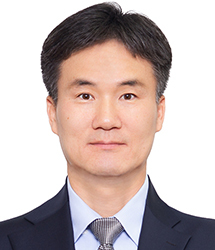
Hee Sup Jung
Director General
Reserve Management Group Bank of Korea
Hee Sup Jung
Reserve Management Group Bank of Korea
Director General
Mr. Jung has served as Director General of the Reserve Management Group at the Bank of Korea since March 2026, overseeing three Divisions and 12 Teams responsible for managing Korea's official foreign exchange reserves. He also represents the Governor of the Bank of Korea on the Steering Committee of the Korea Investment Corporation.
Since joining the Bank of Korea in 1999, he has spent 18 years in reserve management, holding roles including Deputy Director General of the Reserve Management Group, Director of the Reserve Investment Division, Director of the Reserve Management Support Division, Head of the Reserve Management Planning Team, and Head of the Asia-Pacific Treasuries Portfolio Team—spanning front-, middle-, and back-office functions.
He holds an MBA from KAIST (2009) and a BA in Economics from Seoul National University (1996).

Sholthana Begum
Senior Director of Technology and Digital
Competition and Markets Authority (CMA)
Sholthana Begum
Competition and Markets Authority (CMA)
Senior Director of Technology and Digital
Sholthana Begum is the Senior Director of Technology and Digital at the Competition and Markets Authority (CMA), bringing over 20 years of experience across frontline regulation, central banking, and financial services, having held senior roles at the Financial Conduct Authority (FCA) and the Bank of England.
Throughout her career, Sholthana has built expertise in regulatory technology, data-driven innovation, and digital transformation. She has a proven track record in designing, developing, and executing technology and data strategies, whilst delivering operational efficiencies that support regulatory missions.
At the CMA, Sholthana leads on all aspects of technology, systems, and digital capability. Her remit covers strategy, infrastructure, data management, digital products, IT services, and cyber security and scalable AI, ensuring that the CMA is equipped with robust, scalable, and innovative technology to meet the demands of a fast-changing and complex regulatory environment - both now and in the future.
Sholthana is passionate about harnessing technology and data to strengthen regulatory effectiveness and to drive positive outcomes for markets, businesses, and consumers alike.
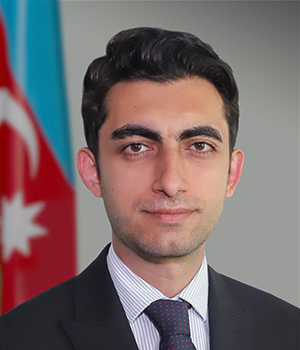
Shahin Mahmudzade
Executive Director
Central Bank of the Republic of Azerbaijan
Shahin Mahmudzade
Central Bank of the Republic of Azerbaijan
Executive Director
Shahin Mahmudzada currently serves as the Executive Director of the Central Bank of the Republic of Azerbaijan, a position he has held since January 2024. As Executive Director, he is responsible for Financial stability, Sustainable development of the financial sector, Market conduct regulation, and Resolution. He initially rejoined the Central Bank in July 2023 as a Counselor to the Governor, having started his early career in the bank's Monetary Policy Department in 2016.
Prior to his current executive role, Mr. Mahmudzada spent five years at PASHA Life Insurance OJSC, where he rapidly progressed from Senior Specialist to Head of the Credit Market and Liquidity Risks Management Division, ultimately serving as the Head of the Risk Management Department from 2021 to 2023.
A certified Chartered Financial Analyst (CFA) since 2021, he holds a Master’s degree in Finance from Sabancı University and a Bachelor’s degree in Finance from Ankara University, which included a one-year Erasmus exchange program in Economics and Management at KU Leuven in Belgium. Mr. Mahmudzada is also a distinguished winner of the third "Yukselish" competition. He is married and has one child.

Gábor Gyura
Founder & Director
Hungarian Sustainable Investment and Finance Association
Gábor Gyura
Hungarian Sustainable Investment and Finance Association
Founder & Director
Gábor Gyura is the Director of the Hungarian Sustainable Investment and Finance Association and a Visiting Fellow at the Florence School of Banking & Finance at the European University Institute. From 2022 to 2025, he worked as a consultant to the United Nations Environment Programme Finance Initiative (UNEP FI), designing and delivering international capacity-building programmes for banks. Prior to that, he held senior expert and management roles at the Central Bank of Hungary and served as a financial services policy expert at the European Central Bank.
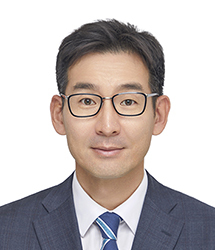
Chang Kee Lee
Team Head of Digital Strategy
The Bank of Korea
Chang Kee Lee
The Bank of Korea
Team Head of Digital Strategy
Chang Kee Lee serves as the Team Head of the Digital Strategy Team within the Office of Digital Innovation at the Bank of Korea. In this role, he leads the central bank's overarching digital transformation by spearheading the formulation and execution of comprehensive digital innovation strategies.
His core expertise lies in establishing robust AI governance frameworks and driving forward-looking AI strategic planning to enhance institutional efficiency and future-proof operations. Furthermore, Mr. Lee oversees the design and deployment of department-specific, specialized artificial intelligence capabilities tailored to optimize core workflows across the bank. By seamlessly bridging central banking expertise with cutting-edge technologies, he ensures the secure, ethical, and effective integration of digital solutions into institutional practices.
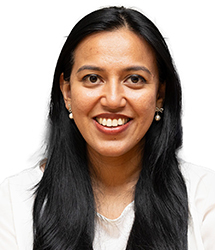
Shasha Kartini Ridzam
Director of Sustainability Department
Bank Negara Malaysia
Shasha Kartini Ridzam
Bank Negara Malaysia
Director of Sustainability Department
Shasha Kartini Ridzam led the Strategic Communications department in Bank Negara Malaysia from November 2020 to June 2025, before recently transitioning to the Sustainability department. Before assuming these roles, she was AirAsia’s Group Head in charge of Global Affairs, Government Relations, Sustainability and Communications.
Prior to AirAsia, Shasha spent 10 years as an economist in Bank Negara Malaysia with a focus on economic development, international economics and financial stability. She led a team of economists that provided assessments, forecasts and policy advice for monetary policy, financial policy as well as structural issues to the Malaysian Government. Her career in the central bank also included a stint as a core member of the team that formulated Malaysia’s 2010 – 2020 Financial Sector Blueprint.
At the international level, she spent two years representing South-East Asia at the International Monetary Fund (IMF) in Washington D.C.
Shasha is an Edward S. Mason Fellow and graduated with a Master in Public Administration from Harvard University and a BSc (Honours) in Economics from the University of Nottingham, United Kingdom. She is also an Obama Leader.
Under Shasha's leadership, Bank Negara Malaysia won the 2024 Communications Initiative Award by the Central Banking Publications based in London
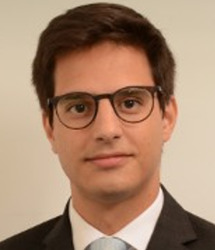
Pedro Quinaz
Deputy Director of Prudential Banking Supervision
Banco de Portugal
Pedro Quinaz
Banco de Portugal
Deputy Director of Prudential Banking Supervision
Pedro Quinaz is Deputy Director in the Banking Prudential Supervision Department at Banco de Portugal, where he has led initiatives spanning strategic planning, methodological development and supervisory innovation.
Drawing on executive leadership experience in the private banking sector and extensive expertise in prudential supervision, he has driven multiple transformational engagements aimed at increasing supervisory effectiveness and efficiency.
Holding top academic honors in Management (BSc), Finance (MSc) and Banking Regulation (PG), Pedro is committed to blending technical knowledge and forward-looking innovation to shape a more effective, technology-enabled supervision.
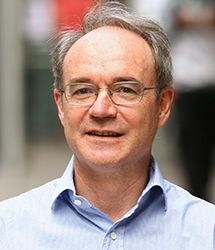
Patrick Bolton
Professor of Finance and Economics
Imperial College London
Patrick Bolton
Imperial College London
Professor of Finance and Economics
Patrick Bolton is Professor of Finance at Imperial College London and senior advisor to the Lazard Climate Center. He is a past President of the American Finance Association, a Fellow of the Econometric Society, the American Academy of Arts and Sciences, and a Corresponding Fellow of the British Academy. He has co-authored Contract Theory (2005) with Mathias Dewatripont, The Green Swan: Central Banking and Financial Stability in the Age of Climate Change (2020) with Morgan Despres, Luiz Pereira Da Silva, Frederic Samama, and Romain Svartzman, and Money Capital: New Monetary Principles for a More Prosperous Society (2024) with Haizhou Huang.
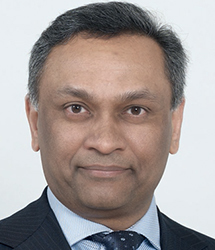
Arnab Das
Co-Founder
GeoLogica Strategies
Arnab Das
GeoLogica Strategies
Co-Founder
Arnab Das is co-founder of GeoLogica Strategies, an investment/research boutique of former chief investment officers, strategists and economists, based in London. GeoLogica uses AI to define the narratives driving the global economy and markets, integrating geopolitics, history, global macro, supply-side/ structural and traditional demand-side/cyclical analysis to assist asset owners and institutional investors with financial strategies.
Arnab has 34 years’ experience in asset management, independent research and investment banking, most recently, Global Economic Counsellor/Macro Strategist, Invesco; Co-Head of Research, Roubini Global Economics; Co-Head of Economics and Strategy/Head of FX & EM Research, Dresdner Kleinwort Wasserstein; Senior EM Strategist, JP Morgan. Arnab is a regular guest lecturer at London Business School. Arnab studied at Princeton and LSE; his interests include macro-financial history, geopolitics, foreign policy and political economy.

Philip Middleton
Deputy Chairman
Official Monetary and Financial Institutions Forum (OMFIF)
Philip Middleton
Official Monetary and Financial Institutions Forum (OMFIF)
Deputy Chairman
Philip Middleton is Deputy Chairman of OMFIF, a leading international independent research group based in London devoted to Central Banking, economic policy, and public investment. He is also a Founder and Vice Chair of the Group's Digital Monetary Institute where he works closely with private and public sector institutions on issues related inter alia to digital payments, CBDC, tokenised finance, and cryptocurrencies.
He recently completed nine years of service as a Commissioner at the Guernsey Financial Services Commission, the regulatory body for the finance sector in the Bailiwick of Guernsey. He was formerly a senior Partner and Head of Central Banking at professional services firm EY, where he specialised in advising financial institutions, governments, central banks and other public institutions across Europe, the Middle East, India and Africa.
Philip has worked with both public and private sector clients in Hungary and in particular enjoyed advising and working with the MNB including a period of 5 years as a Member of the Board of Advisors at the Budapest Institute of Banking.
He has also held several roles within KPMG, including Partner and European Head of Financial Services Strategy Consulting. He holds degrees in History and Modern Languages from The Queen’s College, Oxford University, and an MBA from INSEAD.

Szilvia Gólya
Head of Green Competence Center
OTP Group
Szilvia Gólya
OTP Group
Head of Green Competence Center
Szilvia Gólya, head of OTP Group’s Green Competence Center, graduated with a degree in engineering from Corvinus University of Budapest and went on to study and earn an MBA degree at the Collège des Ingénieurs in Paris. She began her career as a sustainability consultant at a Hungarian NGO, then worked for six years at General Electric as an engineer and later as a project portfolio manager on regional and global transformation projects. In 2020, he joined the OTP Bank team, where she is responsible for the program-level coordination of the bank’s ESG strategy and the operational tasks involved in its implementation.
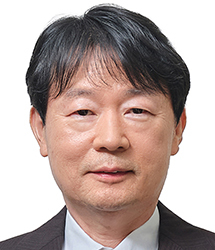
Kwanho Shin
Chair
Korea Money and Finance Association Fund
Professor of Economics
Korea University
Kwanho Shin
Korea Money and Finance Association Fund
Chair
Korea University
Professor of Economics
Kwanho Shin is a Professor of Economics at Korea University and a CESifo Research Fellow of University of Munich. He is concurrently seving as Chair Korea Money and Finance Association Fund. He was previously president of the Korea Money and Finance Association. He received his B.A. and M.A. in economics from Seoul National University and his Ph.D. in economics from UCLA. He served as an Assistant Professor at the University of Kansas for four years and has occasionally taught as a visiting professor at UCLA, Claremont Graduate University and Claremont McKenna College. He was elected as "One of the Fifty Future Leaders in Korea” by the Seoul Economic Daily in 2010, named as a “MaeKyung Economist” by the Maeil Business Newspaper in 2011 and awarded a “Dasan Economist Prize” by The Korean Economic Daily in 2020. He also served as a council member for the National Economic Advisory Council from 2010 to 2011 and from 2022 to 2024. His publications on business cycles, growth, monetary economics, finance, international finance, and labor economics have appeared in leading academic journals, including American Economic Review, Journal of Monetary Economics, Journal of Econometrics, Journal of Money, Credit and Banking, Journal of International Economics, Journal of International Money and Finance, Journal of Banking and Finance, and Journal of Labor Economics.

Magda Bianco
Head of Consumer Protection and Financial Education Department
Banca d’Italia
Magda Bianco
Banca d’Italia
Head of Consumer Protection and Financial Education Department
Magda Bianco is Head of the Bank of Italy’s Consumer Protection and Financial Education Department. At the Central Bank, she previously worked in the Research Department and from 2014 to 2022 she was Head of the Customer Protection and Anti-Money Laundering Directorate.
Since 2021, she has been Co-Chair of the G20 Global Partnership for Financial Inclusion (GPFI), and since 2022, Chair of the OECD/International Network for Financial Education. She is a member of the Governing Council of FinCoNet, and from 2017 to 2023 of the Italian National Committee for Financial Education. She served as economic advisor to the Italian Minister of Justice, and since 2015 has been economic and financial consultant to the Italian President of the Republic.
She has published articles on corporate governance, corporate finance, bankruptcy, economics of civil justice, consumer protection, and financial education.

Assel Marchenko
Deputy Chair of the Management Board
National Payment Corporation Kazakhstan
Assel Marchenko
National Payment Corporation Kazakhstan
Deputy Chair of the Management Board
Assel Marchenko is Deputy Chair of the Management Board and CTO/CIO of the National Payment Corporation of Kazakhstan, the operator of the country’s national digital financial infrastructure. She has more than 25 years of experience across national payment systems, central banking, capital markets and retail digital banking. Her responsibilities include technology strategy, mission-critical payment platforms, cybersecurity, operational resilience and digital transformation, with a focus on secure infrastructure, fraud prevention, interoperability and public trust.

Andreas Billmeier
Visiting Fellow
Bruegel
Andreas Billmeier
Bruegel
Visiting Fellow
Andreas Billmeier is a Visiting Fellow at Bruegel. His areas of interest are macroeconomics and monetary policy, as well as financial markets.
He has extensive experience as economist in the financial sector. His most recent research focuses on inflation and all aspects of monetary policy with a particular focus on the European Central Bank, and the interface between economic policy (in particular monetary but also fiscal) and financial markets. Previously, Andreas has also worked on issues related to (primarily) emerging markets, including exchange rate and trade adjustment, financial vulnerabilities and economic liberalisation.
Most recently, Andreas was the Chief European economist at Brevan Howard, a leading alternative investment manager. Before joining Brevan Howard in September 2022, he was the European economist at Western Asset (WAMCO) from 2019 and, earlier, worked at Stone Milliner Asset Management LLP from 2014 to 2019 and at Ziff Brothers Investments in New York between 2008 and 2014. He began his career as an economist at the International Monetary Fund in 2002. Andreas studied in Bamberg and Bologna and completed a PhD in economics at the European University Institute in Florence. Andreas is fluent in English, German and Italian and has working knowledge of French, Spanish and Portuguese.
Norbert Holczinger
Head of Sustainable Finance Department
Magyar Nemzeti Bank
Norbert Holczinger
Magyar Nemzeti Bank
Head of Sustainable Finance Department
Norbert Holczinger is the Head of Sustainable Finance Department at the Central Bank of Hungary (MNB). He is responsible for the implementation of the MNB’s Green Programme which aims the greening of the Hungarian financial system. He coordinates supervisory actions to identify and mitigate environmental risks and to expand green financial services in Hungary. During his nearly fifteen-year supervisory career, he has played an active role in numerous domestic and international projects and regulatory initiatives, with a particular focus on sustainability issues as well as the insurance and actuarial fields. Previously, as a risk and actuarial expert, he was responsible for mortgage loan portfolio modelling, risk analysis and product pricing at Aegon Hungary.
He graduated as a Quantitative Economic Analyst (Corvinus University of Budapest), also holds a Finance (Fudan University) and MBA degree (Corvinus). Currently he is a PhD student at the Budapest University of Technology and Economics.
Patrick Casey
Head of Cross-Sectoral Policy Division
Central Bank of Ireland
Patrick Casey
Central Bank of Ireland
Head of Cross-Sectoral Policy Division
Patrick Casey is the Head of Cross Sectoral Policy in the Policy and International Directorate at the Central Bank.
Previously Mr. Casey fulfilled the statutory role of Registrar of Credit Unions and led the establishment of Ireland’s national resolution authority under the EU Bank Recovery & Resolution Directive, where he represented the Central Bank at the Brussels-based EU Single Resolution Board.
Prior to joining the Central Bank Mr. Casey held of number of roles in investment banking in London with Citibank and HSBC, and latterly as a director in AIB Corporate Finance in Dublin. He trained as a solicitor with London firm Simmons & Simmons.

Dr. Mariya Pionka
Associate Professor, Research and Graduate Program Coordinator
Excelsia University College
Dr. Mariya Pionka
Excelsia University College
Associate Professor, Research and Graduate Program Coordinator
Dr. Mariya Pionka is a Professor of Finance at Excelsia University College in Sydney, Australia. She brings more than twenty years of experience across the Australian higher-education sector and the banking and financial services industry, and has held senior academic and leadership positions in both Australia and Central Asia (Kazakhstan).
Professor Pionka has an extensive record of policy-relevant research and government engagement. She served as the Principal Investigator for the National Bank of Kazakhstan on the national project “Combating Financial Fraud, Including Financial Pyramids, Internet and Telephone Fraud.” Her research has been featured by the Asian Development Bank, the United Nations, and the IFC/World Bank Group, reflecting her strong impact on financial-sector policy, financial literacy, small business finance, consumer protection, and digital-era regulatory frameworks.
She is a multiple-award recipient, recognised through the International Council for Small Business Presidential Award and several teaching excellence awards from leading Australian universities. She is also co-author of the widely used textbook Financial Planning and Personal Finance: Australia and New Zealand Edition. A recipient of government and university research grants supporting work in financial literacy, fraud prevention, and digital-finance innovation, her current research focuses on how emerging technologies are reshaping financial crime and fraud prevention, with a particular focus on the policy implications of Artificial Intelligence and Quantum Computing for financial-systems intelligence, cyber resilience, and future trust in global financial networks.

Balázs Greinstetter
Director
Magyar Nemzeti Bank
Balázs Greinstetter
Magyar Nemzeti Bank
Director
Balázs Greinstetter graduated from the Faculty of Law at Eötvös Loránd University in 2010. He began his professional career at the Prime Minister’s Office of Hungary, before serving from 2013 as Deputy State Secretary for Economic Planning at the Ministry for National Economy. In 2014, he was appointed Chief of Staff to the Minister. From 2018, he led the Managing Authority responsible for the implementation of SME grant programmes co-financed by the European Union and the Hungarian government, a position he held for seven years. Between 2019 and 2021, he was a member of the Supervisory Board of Széchenyi Funds Ltd., and from 2021 to 2025, he served on the Board of Directors of the Government Debt Management Agency (ÁKK).
Currently, he is the Head of the Digitalization Directorate at the Central Bank of Hungary (Magyar Nemzeti Bank). His area of responsibility includes the digital transformation of the financial system, with a particular focus on artificial intelligence, as well as selected regulatory and supervisory matters related to financial innovation and emerging market technologies.

Géza Sebestyén
Associate Professor
Corvinus University of Budapest
Géza Sebestyén
Corvinus University of Budapest
Associate Professor
Géza Sebestyén is the Head of the Center for Economic Policy at Mathias Corvinus Collegium, and an associate professor at Corvinus University of Budapest. He has Master’s degrees both in mathematics and economics, and a PhD in economics. His main fields of interest are monetary policy, fiscal policy, macrofinances, corporate finance and valuation. Besides Hungary, he gave lectures in France, Germany, Austria, Slovakia, and Azerbaijan. Géza wrote hundreds of articles and is a regular media contributor. He has worked for some of the top Financial and Energy companies in Hungary. Géza is the mastermind and main organiser of the Math Challenge Championship, a math competition for Secondary School students.
Miklós Luspay
Director
Financial Infrastructures and Payments Directorate
Magyar Nemzeti Bank
Miklós Luspay
Magyar Nemzeti Bank
Director
Financial Infrastructures and Payments Directorate
Mr. Miklós Luspay obtained a Master’s degree in Finance from Corvinus University of Budapest and a Law degree from Pázmány Péter Catholic University. He also holds a Master’s in Finance from Fudan University and an MBA from Corvinus University of Budapest. He joined the Central Bank of Hungary (MNB) as an analyst, with an expertise on the liquidity of payment systems. He also worked for the European Central Bank in 2011.
He is currently Director of the Financial Infrastructures and Payments Directorate where his main responsibility includes the development of the Hungarian electronic payment ecosystem and its retail system, including the instant payment system. His directorate created the Central Bank of Hungary’s payment strategy. Currently, they are involved in the payment regulation and responsible for the payment-related research at the MNB, as well as for the development of the CSD and CCP. In recent years, he was responsible for renewing the supervisory methodology, shaping and integrating the oversight and supervisory tasks related to the central bank's critical financial infrastructures, as well as for developing the related central bank risk-based oversight methodology. He also participated in the work of numerous international committees and working groups. He is the author and/or co-author of several publications on payment systems.
Our Partners