Macroprudential measures taken in one Member State of the European Union often apply only to the exposures of financial institutions established in that Member State, i.e. domestic banks and subsidiaries of foreign banks, and do not apply to the exposures of financial institutions established in other EU Member States that arise through branches in the activating Member State or through the provision of direct cross-border services.. The so called reciprocity is the instrument that ensures that these measures also apply to such exposures.
Reciprocation occurs when the macroprudential authority in the reciprocating Member State in which the credit institution concerned is established applies a measure that is the same as or equivalent to a measure taken in the activating Member State to address a risk related to a specific exposure. Reciprocation should ultimately ensure that the same macroprudential measure applies to all financial institutions within the EU that are exposed to the risk targeted by the measure, regardless of where they are located. The reciprocation of macroprudential measures enhances the effectiveness and consistency of macroprudential policy in the EU and also contributes to a level playing field in the Single Market.
Differences in the institutional and national scope of financial services and regulatory measures
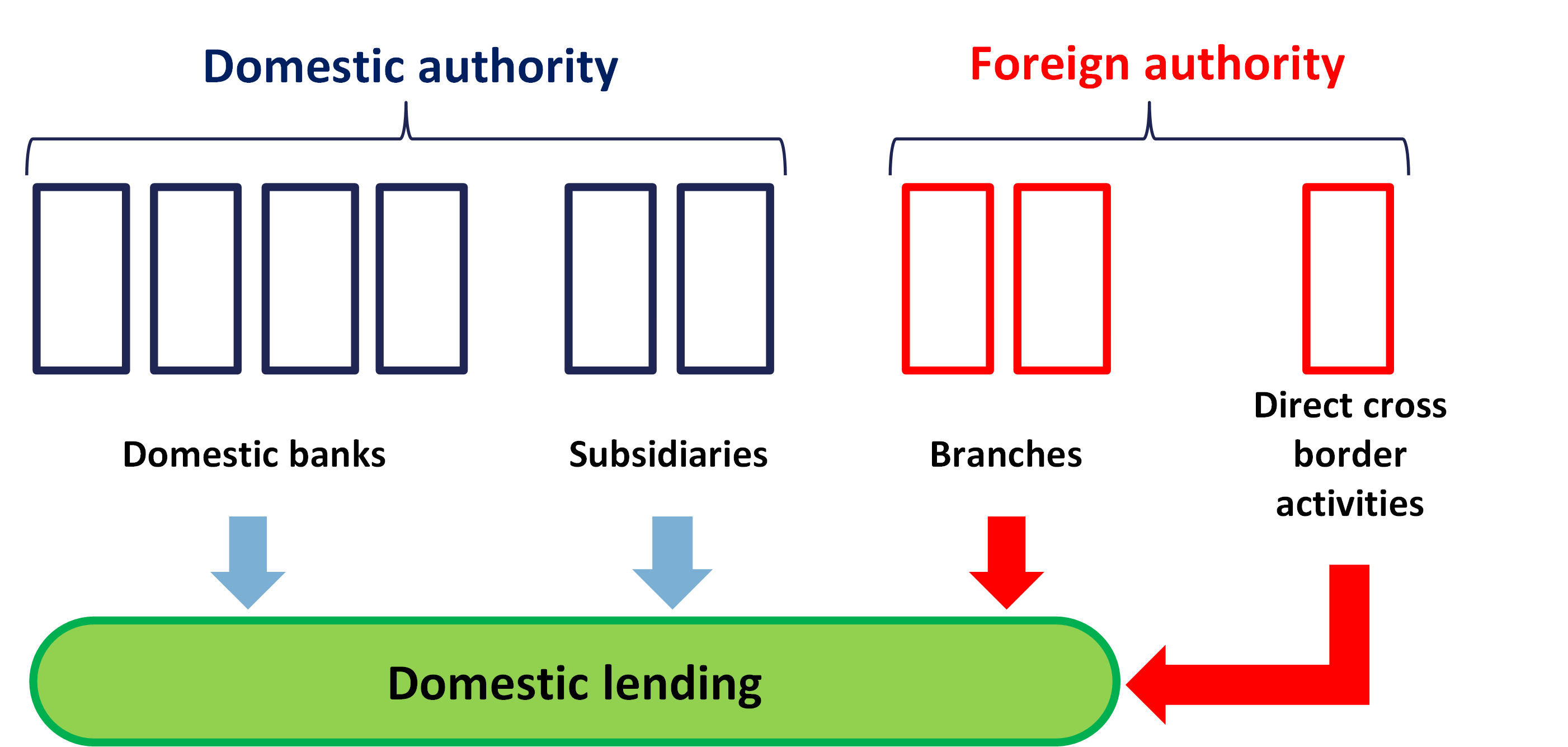
Note: The exposures of institutions marked in blue are directly subject to all domestic macroprudential measures. The exposures of institutions marked in red arising in the domestic market are not subject to all domestic macroprudential measures, so in these cases reciprocation by a foreign authority might be needed.
Source: The ESRB handbook on operationalising macroprudential policy in the banking sector
EU legislation requires Member States to apply mandatory reciprocity in two cases, in the case of the countercyclical capital buffer (CCyB) up to 2.5% and in the case of changes to risk weights or parameters for real estate exposures under Articles 124 and 164 of the CRR. In the case of other macroprudential instruments, due to their often unique nature, the European Systemic Risk Board (ESRB) sets expectations in Recommendation 2015/2 on the assessment of cross-border effects of and voluntary reciprocity for macroprudential policy measures issued on 15 December 2015. The application of the recommendation helps ensure that the impact of the macroprudential measure in the Member State introducing the instrument extends to all institutions providing services in that Member State, thus guaranteeing an effective and distortion-free macroprudential intervention.
According to the recommendation, in relation to macroprudential instruments, in particular the systemic risk buffer (SyRB) and the risk weight measure within the national flexibility instrument under Article 458 of the CRR, the activating Member State may request home authorities to require institutions operating in their jurisdiction, and active in the country imposing the measure, for example through branches or direct cross-border services, to comply with the given macroprudential measure. The ESRB assesses the request, and it adds the given measure to the list of measures recommended for reciprocation in its Recommendation when needed. The recommendation at the same time does not require relevant authorities to apply any macroprudential measures recommended for reciprocity to institutions under their jurisdiction in a mandatory and automatic way, and they may waive them if the volume of exposures to the requesting country is negligible. The de minimis limit established taking into account the proposal of the activating Member State and included in the Recommendation should be used as a starting point when determining the materiality of the exposures.
In line with the ESRB recommendation, the MNB laid down on 24 January 2017 the framework that defines the decision-making process when the ESRB recommends measures of other EU Member States for reciprocity. The framework only requires reciprocation in case of material institution-specific and total exposures above the de minimis limit(s). If the relevant exposures are not material, the MNB automatically refrains from reciprocation. Otherwise, the MNB decides on the reciprocation of a measure in the usual decision-making process for domestic measures.
Process for MNB action related to voluntary reciprocity requests
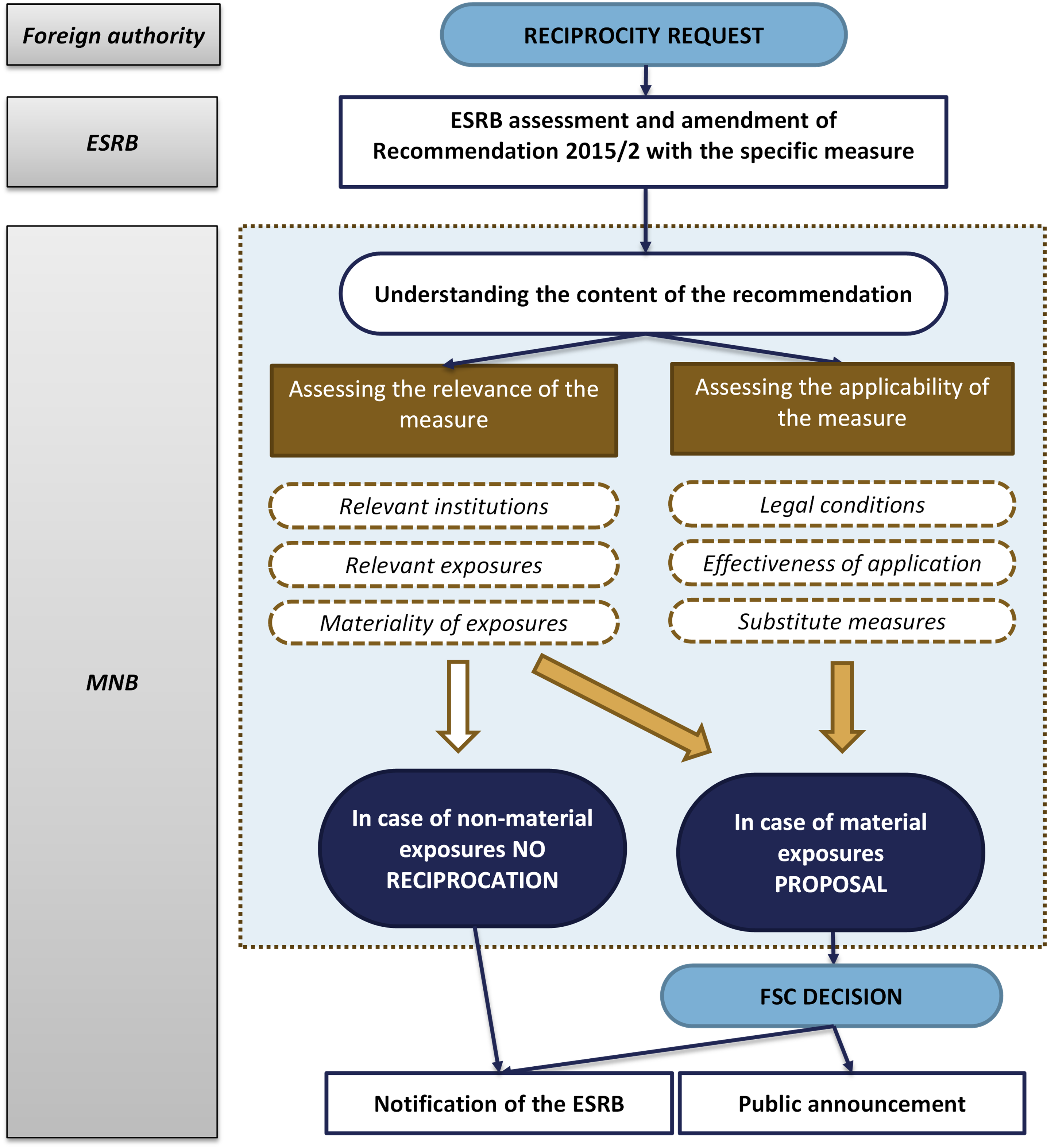
The MNB has not yet reciprocated any measures taken by another Member State and recommended for reciprocity in the absence of significant exposures, nor has it requested the reciprocation of its own measures. Should reciprocation occur in the future, the MNB will publish the decision on its website.
For information on the framework developed by the ESRB and the measures recommended for reciprocation, see the relevant ESRB website.