The concept behind the Budapest Renminbi Initiative Conference
The Magyar Nemzeti Bank (MNB) launched its Renminbi Program and the Budapest Renminbi Initiative Conference in 2015, marking a strategic turning point in Hungary’s financial and economic relations with China. Over the years, this initiative has strengthened bilateral ties, broadened financial cooperation, and positioned Budapest as a key renminbi hub in Central and Eastern Europe (CEE). The 2026 edition takes place amid significant shifts in the global financial landscape. The international monetary system is increasingly shaped by geopolitical fragmentation and technological innovation, accelerating efforts to diversify cross-border payment channels and enhance financial resilience. In this context, the Conference will examine the renminbi’s evolving role within a more multipolar global financial architecture, assessing both the opportunities and structural constraints of its expanding use. It will also explore the regional dimension, focusing on how trade, investment, and financial corridors between China and the CEE region are developing in practice. By connecting global systemic change with concrete regional experience, the event aims to provide a forward-looking assessment of the renminbi’s strengthening international role.
This year’s lead speeches and panel discussions will be organised into two main topics:
- Trade, Investment and Financial Corridors between China and the CEE Region in the Era of Next-Generation Global Financial System
- Renminbi Internationalization in an Evolving Global Financial Architecture

Budapest Renminbi Initiative Conference 2026
The Role of Renminbi in the International Monetary System
12 November 2026
Magyar Nemzeti Bank (MNB) Buda HQ,
1013 Budapest, I. district, Krisztina körút 55.
PROGRAMME
08:30-09:00 Registration and welcome coffee
09:00-09:50 High-level opening
- Mihály VARGA, Governor, Magyar Nemzeti Bank
- High level representative of the Government (TBC)
- H.E. Tao GONG, Ambassador Extraordinary and Plenipotentiary of the People's Republic of China to Hungary
- Wenjian YU, President, People’s Bank of China Shanghai Headquarter
- High level representative of the Bank of China (TBC)
9:50-10:05 Coffee break
11:05-11:10 Panel 1: Trade, Investment and Financial Corridors between China and the CEE Region in the Era of Next-Generation Global Financial System
This panel examines how trade, investment and financial corridors between China and the CEE region are being reshaped by the accelerating internationalization of the renminbi within an increasingly multipolar global financial system. In the past six years, the RMB’s share in global payments has nearly doubled, while cross-border RMB settlements reached RMB 64 trillion in 2024, reflecting approximately a 23% annual increase. China is actively deploying a comprehensive toolkit to deepen financial connectivity, including the expansion of CIPS, 42 bilateral central bank swap agreements, growing offshore clearing networks, and the rapid development of panda and dim sum bond markets. The Belt and Road Initiative - with cumulative engagements exceeding USD 1.3 trillion - further anchors RMB-based financing across infrastructure, energy and advanced manufacturing projects, offering new opportunities for CEE economies to integrate into alternative financial corridors. Drawing on concrete examples from banking, commerce and manufacturing, the panelists will demonstrate through their own institutional perspectives how regional RMB-based trade and investment corridors are evolving in practice and will debate the future role of the currency within a fragmented yet increasingly diversified global financial architecture.
Lead speaker
- (TBC)
Moderator
- Tibor TÓTH, Chief Executive Officer, Budapest Stock Exchange
Panellists
- Zumin SHAO, General Manager, Financial Management Department, China Eastern Airlines
- Sándor PATAKI, Director, Investor Relations and Capital Markets Operations, OTP Bank
- (TBC)
11:10-11:25 Coffee break
11:25-12:30 Panel 2: Renminbi Internationalization in an Evolving Global Financial Architecture
As the global financial system becomes more fragmented and geopolitically contested, China is accelerating the internationalization of the renminbi through the development of alternative financial infrastructure designed to reduce reliance on the US dollar, mitigate sanctions exposure, and strengthen monetary sovereignty. Rather than prioritizing rapid full convertibility, the current strategy focuses on expanding cross-border RMB trade settlement, improving efficiency in current account transactions, and building a multi-layered ecosystem that enables direct, high-speed, and digital payments. This includes the expansion of cross-border payment systems, offshore clearing arrangements in major financial hubs, bilateral currency swap frameworks to support liquidity in emerging markets, and the advancement of digital currency platforms facilitating real-time settlement. While RMB usage in global payments remains relatively modest, the currency’s role is growing in bilateral trade, particularly with emerging countries and Belt and Road partners. The present phase of RMB internationalization appears less about challenging the global dominance of the US dollar and more about deepening regional and bilateral settlement channels. This panel will examine the opportunities and constraints embedded in this evolving architecture, assessing whether alternative payment infrastructure and digital innovation can meaningfully reshape global financial flows, and what structural, regulatory, and trust-related challenges may shape the RMB’s long-term international trajectory.
Lead speaker
- Changchun MU, Director-General, Digital Currency Research Institute, People's Bank of China (TBC)
Moderator
- Ádám BANAI, Executive Director, Magyar Nemzeti Bank (TBC)
Panellists
- Xuanyang XIE, Vice President, Cross-Border Interbank Payment System (CIPS)
- Wenwen LIU, Head of the Research Department, Shanghai Headquarters, China Central Depository Company
- TBC
12:30-12:40 Closing remarks
- Dániel PALOTAI, Deputy Governor, Magyar Nemzeti Bank
12:40 Lunch
SPEAKERS

Mihály Varga
Governor
Magyar Nemzeti Bank
Mihály Varga
Magyar Nemzeti Bank
Governor
Born in Karcag in 1965, he earned his secondary school diploma in Áron Gábor Secondary School in 1983, and he went on to graduate from the Budapest University of Economic Sciences in 1989.
He worked as an economist at the No. 43 State Construction Corporation in Budapest, and in 1990 at the Eastern-Hungarian Water Management and Planning Enterprise in Szolnok. Between 1995 and 1997, he was a visiting instructor at the Szolnok Economic College, and an honorary college professor.
Between 1998 and 2001, he served as Minister of State for Policy at the Ministry of Finance, and from 2001 to 2002, he held the position of Minister of Finance. Between 2010 and 2012 he was Minister of State, Head of the Prime Minister’s Office, and then he became Minister without Portfolio responsible for the relations with some international financial organisations. From March 2013 to 2018 he was Minister of National Economy. From March 2017 to 2022 he was President of the National Competitiveness Council. Between 2018 and 2024 he served as Minister of Finance. Since 4 March 2025, he has been the Governor of the Magyar Nemzeti Bank.
From 1990 to February, 2025 he was member of Parliament in representation of Fidesz. He was an elected member of Parliament for the 8th constituency of Jász-Nagykun-Szolnok County between 1998 and 2014, then he was the elected member of Parliament in an individual electoral district for the Budapest 4th constituency between 2014 and 2022. Between 1994 and 2003 and from 2005 to 2013, he was one of the vice presidents of Fidesz.
Roles in public life: Since 1997, the vice-president of the Hungarian-Kazakh Friendship. From 2000, member of the Chivalric Order of St John. From 2001 to 2011, presbyter of the Reformed Church congregation in Karcag, and a member of the Rákóczi Association. From 2003 to 2015, Chair of the Nagykun Civil Association. Member of the Hungarian Athletic Club. From 2012 to 2025, co-president of the Joint Venture Association, the Hungarian-Kazakh Intergovernmental Committee for Economic Cooperation and the Hungarian-Korean Joint Economic Committee. From 2013 to 2025, the president of the Board of Trustees of the Annamária Szalay Media Foundation. From 2021 to 2023, the president of the Board of Trustees of the Foundation for Rudolf Kalman University. From 2021 to 2025, the president of the Board of Trustees of the Foundation for Civic Education.
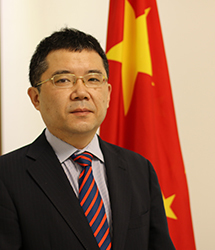
H.E. Tao Gong
Ambassador Extraordinary and Plenipotentiary
Embassy of the People's Republic of China in Hungary
H.E. Tao Gong
Embassy of the People's Republic of China in Hungary
Ambassador Extraordinary and Plenipotentiary
Gong Tao is a senior Chinese diplomat with more than three decades of experience in international relations and foreign affairs. Born in October 1970 in Xiaogan, Hubei Province, he holds a master’s degree in economics and began his diplomatic career in 1992 at the Ministry of Foreign Affairs of the People’s Republic of China.
Throughout his career, he has held a variety of positions within the Ministry and at Chinese diplomatic missions abroad, developing extensive expertise in European, Latin American and African affairs. He served at the Chinese Embassy in Portugal on several occasions, worked as Counselor at the Chinese Embassy in Brazil, and later became Deputy Director-General of the European Department of the Ministry of Foreign Affairs. From 2018 to 2023, Gong Tao served as Ambassador Extraordinary and Plenipotentiary of the People’s Republic of China to the Republic of Angola. In 2023, he was appointed Ambassador Extraordinary and Plenipotentiary of the People’s Republic of China to Hungary, bringing extensive diplomatic and international experience to his current position.

Wenwen Liu
Head of the Research Department
Shanghai Headquarters, China Central Depository Company
Wenwen Liu
Shanghai Headquarters, China Central Depository Company
Head of the Research Department
Ms. Wenwen Liu serves as the Head of the Research and Development Department at the Shanghai Headquarters of China Central Depository & Clearing Co., Ltd. (CCDC), the central securities depository of China's bond market.
Ms. Liu's research focuses on the opening-up of China's bond market and the development of financial market infrastructure, among other areas, in which she has accumulated extensive expertise. She holds a Ph.D. in Economics from Fudan University.
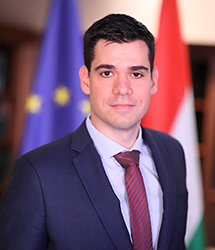
Ádám Banai
Executive Director and Chief Economist
Magyar Nemzeti Bank
Ádám Banai
Magyar Nemzeti Bank
Executive Director and Chief Economist
Ádám Banai has received his MSc from Corvinus University of Budapest. He holds a PhD in Finance from Corvinus University of Budapest. He joined the Financial Stability department of The Central Bank of Hungary in 2008. From 2013 to 2017 he was the head of Applied Research and Stress-testing Department. From mid-2017 he was the director of Financial System Analysis directorate. From 2020 he was the executive director for Monetary Policy Instruments, Financial Stability and Foreign Reserve Management then he was also responsible for the bond purchasing program of the MNB. From early 2025, he is in his current position. He is responsible for monetary policy, for financial stability and macroprudential policy.
He is a member of the Financial Stability Board in Hungary. He is also a member of the supervisory board at KELER CCP. He is a member of the advisory board at ESCP Europe Institute of Real Estate Finance and Management and the Royal Institute of Chartered Surveyors. He is an industry fellow at Griffith University. His main research fields are macroprudential policy, monetary policy, sustainability in central banking and real estate markets. He has several papers, articles in high level journals. He is also the president of the General Assembly of Hungarian Canoe Federation.
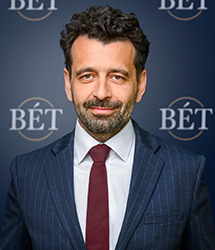
Tibor Tóth
CEO
Budapest Stock Exchange
Tibor Tóth
Budapest Stock Exchange
CEO
Mr. Tibor Tóth is the CEO of the Budapest Stock Exchange as of May 1, 2025.
From March to May 2025, he served as Chief Advisor to the Governor of the Central Bank of Hungary.
Between 2022 and 2024, he held the position of State Secretary at the Ministry of Finance, responsible for Macroeconomic and International Affairs. During this time, he also acted as Chairman of the National Council of the Organization for Economic Co-operation and Development (OECD), Alternate Governor of the World Bank Group, and as member of the Economic and Financial Committee (EFC).
He graduated from the University of Miskolc in 1996, where he obtained his degrees from the Faculty of Economics and from the College for Foreign Trade. After graduation, he began his career as a tax advisor and consecutively worked as a senior advisor at Arthur Andersen.
Mr. Tóth held senior positions for eight years at ABN Amro Bank and Citibank. Then moved to KDB Bank (Europe) Ltd. in 2005, where after serving in senior positions, he became Deputy CEO between 2013 and 2021.
Mr. Tóth is fluent in English.
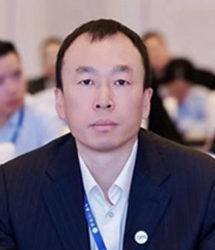
Xuanyang Xie
Vice President
Cross-Border Interbank Payment System (CIPS)
Xuanyang Xie
Cross-Border Interbank Payment System (CIPS)
Vice President
Mr. Xuanyang Xie, Vice President of CIPS, holds a postgraduate degree and a Doctoral degree in Engineering. Prior to this role, he worked at several branches of the People's Bank of China, including Hefei, Fuyang, and Chaohu Branch. He was appointed Vice President of CIPS Co., Ltd. in August 2024.
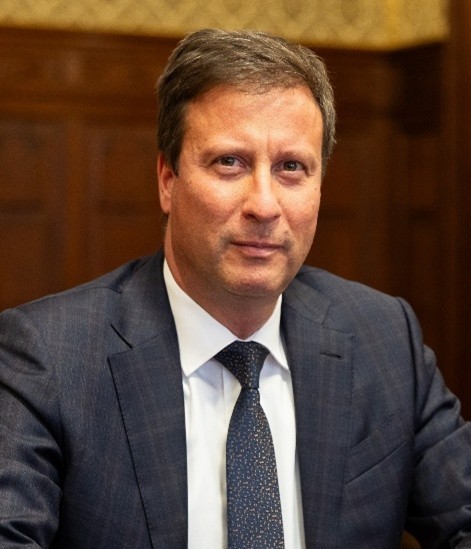
Dániel Palotai
Deputy Governor
Magyar Nemzeti Bank
Dániel Palotai
Magyar Nemzeti Bank
Deputy Governor
As from September 2025, Dániel Palotai is Deputy Governor of the Magyar Nemzeti Bank (MNB), in which capacity he is Member of the Monetary Council and he is also responsible for international relations. Between 2020 and 2025, he served in Washington DC on the Executive Board of the International Monetary Fund (IMF), representing the Central and Eastern European Constituency as Executive Director, and from November 2024 as Alternate Executive Director. From 2013 to 2020, he was Executive Director and Chief Economist of the MNB. From November 2010, he headed the Macroeconomic Policy Department of the Ministry for National Economy. Between 2007 and 2010 he served at the European Central Bank as an economist responsible for non-euro area EU member states. In 2015, he was awarded the Sándor Popovics Prize. He is an Honorary Associate Professor at Corvinus University of Budapest and Vice President of the Hungarian Economic Association (MKT).